- Internetchevron_right
- TV & Streamingchevron_right
- Providerschevron_right
- Resourceschevron_right
- GIVE OUR EXPERTS A CALLcall833-481-4463
Table of Contents

Best built-in features

Best affordable option

Best gaming add-on
Cable internet is a type of broadband internet service that delivers internet to your home through the same coaxial cables used for cable TV. It was one of the first widely available broadband options, after DSL, and it’s still common because cable companies already have extensive networks in place. Cable also offers plenty of bandwidth, providing download speeds up to 1 Gbps, and even multi-gig speeds in some markets.
Cable internet is widely available and fast enough for most homes. It runs over existing coaxial cable TV lines, making it one of the most accessible broadband options, especially in urban and suburban areas, and it can deliver over 1 Gbps in some markets.
It’s a strong all-around pick for streaming, gaming, and working from home.
The biggest performance downside is consistency during peak hours. Cable is a shared neighborhood connection, so speeds can dip when more nearby households are online, often most noticeable in the evening.
Uploads are the main tradeoff versus fiber. Even when cable download speed hit 1–2 Gbps, upload speeds are often much lower, averaging 20-50 Mbps, which is most noticeable during video calls, large file uploads, and cloud backups.
Data caps, price hikes, fees, and contracts are common with cable internet plans. Some providers have data caps, or charge for unlimited data, many have equipment, installation, and activation fees, and promo pricing may increase after the intro period.
If you live in an urban or suburban area, cable internet is an ideal and readily available solution. Its speeds are significantly faster than DSL, and its cost per Mbps is much lower. Some providers are breaking the 1 Gbps benchmark and offer multi-gigabit internet in select areas.
A 400 Mbps cable internet connection is more than enough to handle working remotely, HD and 4K streaming, and gaming. However, since cable internet is a shared connection, your speeds may decrease depending on how many other households in your area are using the same service.
Many cable providers have data caps. If you know what your data needs and demands are to support your digital lifestyle, it might make sense to purchase an unlimited plan if one is available. Data overages can quickly become expensive.
Lower cost per Mbps than DSL
More available than fiber
Ideal for gaming and HD+ streaming
Reduced speeds during peak hours
Data caps may apply
Contracts are often required
| Provider | Starting Price | Max Download | Max Upload | Data Caps | Find Plan |
|---|---|---|---|---|---|
| Xfinity | $30/mo. – $100/mo. | 2,000 Mbps | 35 Mbps | No | Check Availability |
| Spectrum | $30/mo. – $80/mo. | 1000 Mbps | 35 Mbps | No | Check Availability |
| Cox | $49.99/mo. | 1000 Mbps | 35 Mbps | Yes | Check Availability |
| Mediacom | $35.00/mo.* | 1000 Mbps | 50 Mbps | Yes | Check Availability |
| Breezeline | $19.99/mo. | 1000 Mbps | No | Check Availability |
| Provider | Xfinity |
|---|---|
| Starting Price | $30/mo. – $100/mo. |
| Max Download | 2,000 Mbps |
| Max Upload | 35 Mbps |
| Data Caps | No |
| Check Availability | |
| Provider | Spectrum |
| Starting Price | $30/mo. – $80/mo. |
| Max Download | 1000 Mbps |
| Max Upload | 35 Mbps |
| Data Caps | No |
| Check Availability | |
| Provider | Cox |
| Starting Price | $49.99/mo. |
| Max Download | 1000 Mbps |
| Max Upload | 35 Mbps |
| Data Caps | Yes |
| Check Availability | |
| Provider | Mediacom |
| Starting Price | $35.00/mo.* |
| Max Download | 1000 Mbps |
| Max Upload | 50 Mbps |
| Data Caps | Yes |
| Check Availability | |
| Provider | Breezeline |
| Starting Price | $19.99/mo. |
| Max Download | 1000 Mbps |
| Max Upload | |
| Data Caps | No |
| Check Availability | |
Pricing, speeds, offers, and availability vary by service address and are subject to change at any time. Additional fees, taxes, and terms may apply. As of 12/29/2025.

Cable is an excellent broadband internet solution capable of speeds exceeding 1 Gbps that can easily support multiple users at the same time. After DSL, it has the broadest infrastructure and availability and typically is more affordable than fiber internet. The main disadvantage to cable internet is its low upload speeds, but that usually isn’t a problem for the average user.
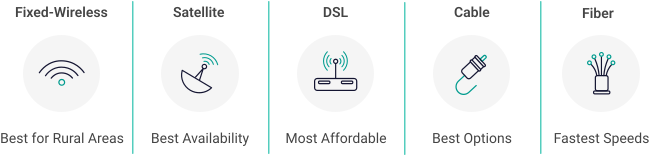
While it doesn’t have the availability of DSL internet, cable internet is the second-most accessible wireline internet service. Satellite internet is the most accessible in the country, but it lacks the speed of cable internet. Cable speed competes with fiber speed, but cable is far more available than fiber at this time. Given its speed capabilities and availability, cable internet is an ideal solution that can satisfy most internet lifestyles and needs.
| Internet Type | Starting Price (typical) | Max Download (typical peak) | Latency (typical) | Availability |
|---|---|---|---|---|
| Cable | $30-$70+/mo | 1-2 Gbps tiers common (DOCSIS 3.1) | 13-27 ms | Very wide footprint across the U.S. |
| Fiber | $50-$70+/mo | 1-5+ Gbps (select markets up to 8 Gbps) | 10-12 ms | Expanding, strongest in metro/suburban areas; check address. |
| 5G Home Internet | $30-$60/mo | 133-415 Mbps typical (some addresses higher) | 17-32 ms typical | Growing; availability varies by carrier signal and congestion. |
| DSL | $55+/mo | Up to 100 Mbps (VDSL2; distance-dependent) | 11-40 ms | Legacy copper; shrinking in many cities, still common in some rural areas. |
| Satellite (LEO & GEO) | $40-$120+/mo | LEO 45-280 Mbps; GEO up to 100-150 Mbps | LEO 25-60 ms; GEO 500-800 ms | Near-universal (requires clear sky view). |
| Fixed Wireless | $35-$70+/mo | 25-300 Mbps (provider and tower-dependent) | 10-50 ms | Regional/tower-based; strongest in rural/suburban edges. |
| Internet Type | Cable |
|---|---|
| Starting Price (typical) | $30-$70+/mo |
| Max Download (typical peak) | 1-2 Gbps tiers common (DOCSIS 3.1) |
| Latency (typical) | 13-27 ms |
| Availability | Very wide footprint across the U.S. |
| Internet Type | Fiber |
| Starting Price (typical) | $50-$70+/mo |
| Max Download (typical peak) | 1-5+ Gbps (select markets up to 8 Gbps) |
| Latency (typical) | 10-12 ms |
| Availability | Expanding, strongest in metro/suburban areas; check address. |
| Internet Type | 5G Home Internet |
| Starting Price (typical) | $30-$60/mo |
| Max Download (typical peak) | 133-415 Mbps typical (some addresses higher) |
| Latency (typical) | 17-32 ms typical |
| Availability | Growing; availability varies by carrier signal and congestion. |
| Internet Type | DSL |
| Starting Price (typical) | $55+/mo |
| Max Download (typical peak) | Up to 100 Mbps (VDSL2; distance-dependent) |
| Latency (typical) | 11-40 ms |
| Availability | Legacy copper; shrinking in many cities, still common in some rural areas. |
| Internet Type | Satellite (LEO & GEO) |
| Starting Price (typical) | $40-$120+/mo |
| Max Download (typical peak) | LEO 45-280 Mbps; GEO up to 100-150 Mbps |
| Latency (typical) | LEO 25-60 ms; GEO 500-800 ms |
| Availability | Near-universal (requires clear sky view). |
| Internet Type | Fixed Wireless |
| Starting Price (typical) | $35-$70+/mo |
| Max Download (typical peak) | 25-300 Mbps (provider and tower-dependent) |
| Latency (typical) | 10-50 ms |
| Availability | Regional/tower-based; strongest in rural/suburban edges. |
Between hidden fees and price hikes, finding the right internet plan can feel overwhelming. To help with your search, our team of internet experts evaluates ISPs on categories including performance, affordability, and customer satisfaction to provide you with the best options near you.
Cable internet is one of the most common services in urban and suburban areas. However, some providers do have cable deployments in rural areas. If you do live in a rural or remote area, you will have more luck finding DSL internet or satellite internet.
It far exceeds DSL internet speeds, and competes with fiber internet speeds. However, fiber has the capacity to deliver speeds up to 10 Gbps, but the technology to support those speeds doesn’t exist at a consumer level. Cable is also more accessible than fiber at this point in time, but you can expect to see fiber becoming more available in the next few years.
Cable internet is a shared connection, meaning that if people in your building or neighborhood also use the same cable provider, your speed will be affected by the number of people using it at the same time. This typically is most noticeable at night, but the number of people working remotely has a significant impact during the day.
Xfinity has excellent internet and TV bundles with low starting prices to get to the services you need. Spectrum and Cox also offer robust cable and internet plans with many features built into their services. Enter your zip code to find the most affordable cable and internet plan in your area.
There are many cable internet providers across the country that offer stable, reliable, and fast internet speeds. To find the best cable internet provider near you, Enter your zip code here.
Most homes, condos, and apartments already have coaxial cable installed and connected to the cable network. If yours doesn’t, the cable operator will have to install cable and a jack in the home. Cable internet requires a modem and a router to distribute the connection in the home.
Most cable operators offer a gateway for a monthly fee, which often has WiFi built into it, making it easy to connect your devices to your cable internet service. While you can rent this equipment from your provider, you can also purchase one that meets the provider’s technical requirements. However, some of the provider’s built-in services, such as security and parental controls, may not be available through a consumer router.